 /
/ 




Receive our latest arrivals of Domaine Marc Kreydenweiss directly in your inbox!
Sign up and be the first to hear about new arrivals.

Would you like to create the composition yourself? Contact us!
 Contact us

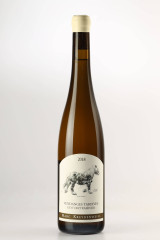
Domaine Marc Kreydenweiss is a benchmark for great biodynamic wines from Alsace and one of the most distinctive addresses in the Alsatian vineyard. Founded in Andlau by Marc Kreydenweiss in 1971 on a terroir cultivated for more than twelve hundred years, passed on in 2008 to his son Antoine Kreydenweiss, it produces in certified biodynamics across 13.5 hectares and three Grands Crus — Kastelberg, Wiebelsberg, Moenchberg — age-worthy Alsace wines of a precision and minerality that make them benchmarks for Alsace Riesling and Alsace Pinot Gris. Its cuvées rank among the most sought-after rare great Alsace wines. Flagship vintages: 2013, 2015, 2017, 2018 and 2019.
Filter
Products (6)
Sign up and be the first to hear about new arrivals.
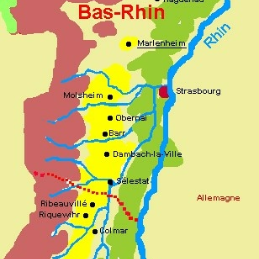
Domaine Marc Kreydenweiss is one of the benchmark references for the great wines of Alsace. Located in Andlau, in the heart of the Bas-Rhin, this family estate has been cultivating vines for several generations and has established itself as a pioneer of biodynamics in Alsace. Today led by Antoine Kreydenweiss, it produces wines recognized for their precision, their expression of terroir, and their aging potential.
Yes. Domaine Marc Kreydenweiss is among the pioneers of biodynamic viticulture in Alsace. This approach aims to promote the natural balance of soils and vines in order to best express the identity of each terroir. The estate's wines are certified in organic and biodynamic farming.
The estate's wines offer many food and wine pairing possibilities. The Rieslings pair perfectly with seafood, noble fish and Asian cuisines. The Pinot Gris go well with poultry and sauced dishes, while the Gewurztraminers pair ideally with aged cheeses or certain spiced cuisines.
The vine has been cultivated in Andlau for more than twelve hundred years. In the 9th century, Pope Leo IX — of Alsatian origin — had the Vatican cellars filled with wines from this small village nestled at the foot of the Vosges massif. It is in this context of long history that Marc Kreydenweiss took over the family estate in 1971 and undertook, from the 1980s onward, a radical transformation: the complete abandonment of chemistry and a commitment to biodynamics — well before such an approach became a trend in the Alsatian vineyard.
The reach of this commitment extends beyond the estate alone. Marc Kreydenweiss founded the Biodyvin association — which became the benchmark for biodynamic certification in viticulture in France — alongside Didier Dagueneau, Henri Jayer, and Eric Bordelet. This pioneering stance makes Domaine Marc Kreydenweiss one of the great architects of the qualitative renewal of Alsace Riesling and biodynamic Alsace wines.
In 2008, his son Antoine Kreydenweiss took over the direction of the estate and charted his own course, in rigorous continuity with his father's foundations. The same biodynamics, the same refusal of compromise, but a new sensibility oriented toward the most direct possible expression of the Andlau terroirs. Since 2020, all the estate's Alsace wines have been produced exclusively from grapes grown in the family vineyard — a commitment to total coherence between place and bottle.
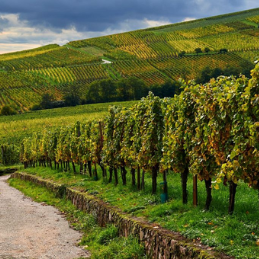
The vineyard of Domaine Marc Kreydenweiss rests on a mosaic of terroirs among the most complex in Alsace. Three Alsace Grands Crus form its backbone. The Grand Cru Kastelberg is unique in Alsace: its bedrock of blue and black schists — among the oldest in the region — imparts to the Riesling a vertical energy, a stony salinity, and a smoky minerality that set it apart from anything else Alsace produces. It is the estate's collector's cuvée, to be kept for ten to twenty years.
The Grand Cru Wiebelsberg — with its soils of pink Vosges sandstone — produces more ethereal, floral Alsace Rieslings of luminous finesse. The Grand Cru Moenchberg, on calcareous marls and clays, is the terroir for Alsace Pinot Gris par excellence: generous flesh, imposing structure, a saline and spiced finish that ensures remarkable longevity. Around these three Grands Crus orbit lieu-dit vineyards of character: Clos Rebberg, Lerchenberg, and Kritt, all cultivated with the same biodynamic rigor.
The philosophy of Domaine Marc Kreydenweiss rests on a founding conviction that Marc Kreydenweiss expressed as follows: "terroir must dominate grape variety." This phrase sums up everything: the viticultural choices, the biodynamic commitment from the very beginning, the refusal of any intervention that would mask the identity of the place. Andlau, its schists, its sandstone, its marls — that is where everything begins and where everything ends.
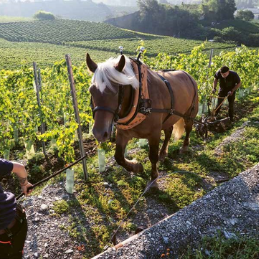
When Antoine Kreydenweiss took over the estate in 2008, he chose to work with his horse in the vineyards — a gesture that says everything about his vision. Animal traction preserves the soils, slows the pace, and compels close attention to every row. It is this care devoted to each vine, each plot, that gives Marc Kreydenweiss wines their precision and their unmistakable character.
In the panorama of great Alsace wines, Domaine Marc Kreydenweiss occupies an irreplaceable place. The estate shares with Zind-Humbrecht and Weinbach the conviction that the great Rieslings of Alsace are terroir-driven wines before they are varietal wines.
For lovers of age-worthy Alsace wines, the Kastelberg from Marc Kreydenweiss is one of the most reliable values in the Alsatian vineyard. Its capacity to age fifteen to twenty years while developing ever-growing aromatic complexity places it on a level with the greatest white wines for ageing in the world. The 2013, 2015, and 2017 vintages are today in a phase of full expression. The 2018 and 2019 — sunny vintages perfectly balanced by the minerality of the schists — still merit a few more years to reveal their full depth.